1. Copper sulfate point test: The copper sulfate point test is the simplest method to quickly distinguish between ordinary carbon steel elbows and all types of stainless steel elbows. The concentration of copper sulfate solution used is 5-10%. Before conducting the spot test, the test area should be thoroughly cleaned of grease or various impurities, and a small area should be polished with a soft cloth. Then, copper sulfate solution should be dripped into the cleaned area using a dropper. Ordinary carbon steel or iron will form a layer of surface metallic copper within a few seconds, while the surface of stainless steel elbows does not produce copper precipitation or display the color of copper.
2. Magnetic test: Magnetic test is the simplest method to distinguish annealed austenitic stainless steel elbows from ferritic stainless steel elbows. Austenitic stainless steel elbows are non-magnetic steel, but after cold working under high pressure, they will have mild magnetism; Pure chromium steel and low-alloy steel are both strong magnetic steels.
3. Nitric acid point test: A significant feature of stainless steel elbows is their inherent corrosion resistance to concentrated and dilute nitric acid. This performance allows it to be easily distinguished from most other metals or alloys. However, high carbon 420 and 440 steels are slightly corroded during the nitric acid point test, while non-ferrous metals are immediately corroded when exposed to concentrated nitric acid. And dilute nitric acid has strong corrosiveness to carbon steel elbows.
4. Sulfuric acid test: The sulfuric acid immersion stainless steel elbow test can distinguish 302 and 304 from 316 and 317. The cut edges of the sample should be finely ground, and then cleaned and passivated in nitric acid (specific gravity 1.42) with a volume concentration of 20-30% and a temperature of 60-66 ℃ for half an hour. The volume concentration of sulfuric acid test solution is 10%. When heated to 71 ℃ and immersed in this hot solution,. 302 and 304 steel are rapidly corroded and produce a large number of bubbles, and the samples turn black within a few minutes; The samples of 316 and 317 steel are not corroded or react slowly (without producing bubbles), and the samples do not change color within 10-15 minutes. If samples with known components are tested simultaneously for approximate comparison, the experiment can be more accurate.
 DIN 2637 PN100 Welding Neck Flange
 DIN 2636 PN64 Welding Neck Flange Dimensions
 DIN 2635 PN40 Welding Neck Flange Dimensions
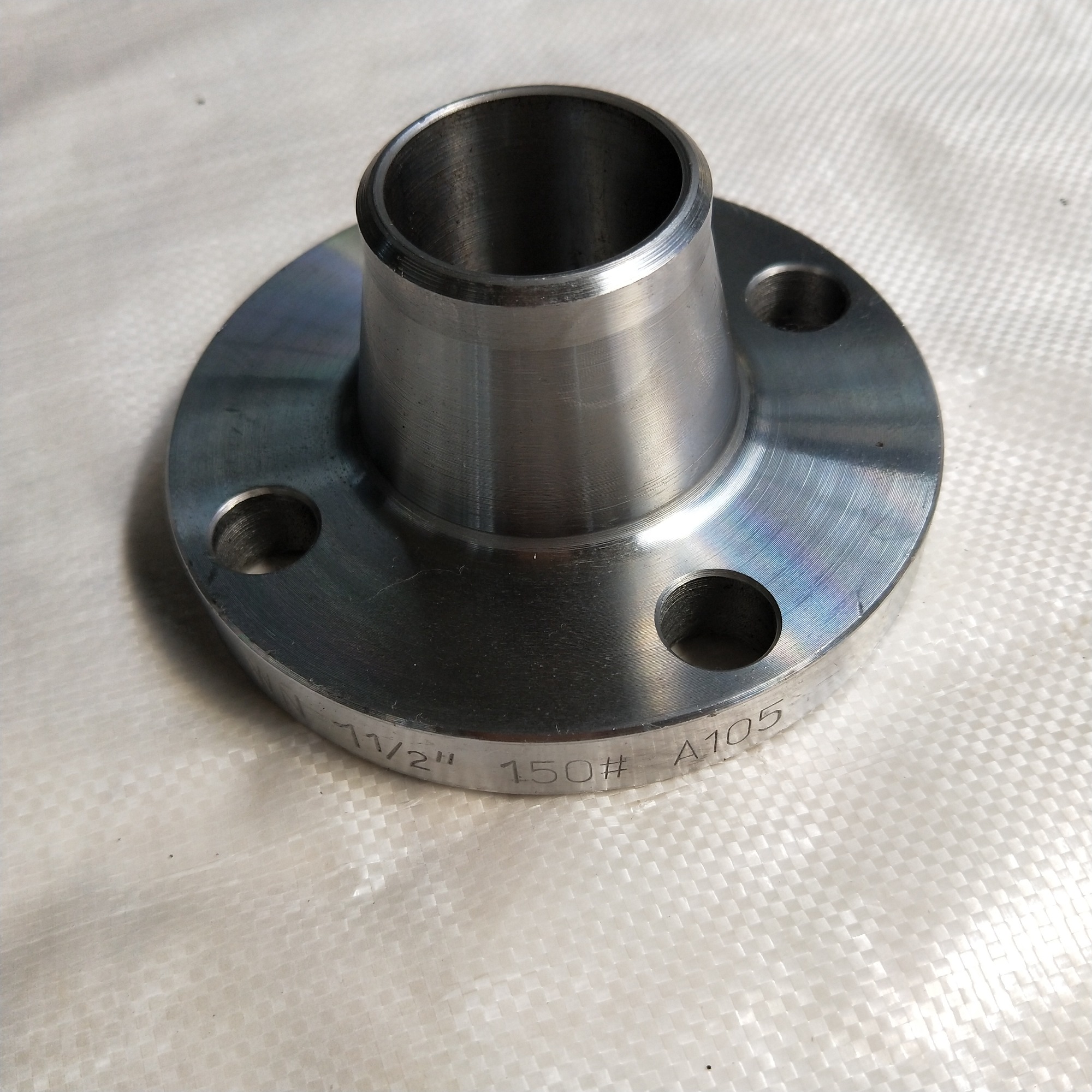 DIN 2634 PN25 Welding Neck Flange